
A High-Converting Website For Plumbers in 2026
Learn how to build a plumbing website that captures high-intent leads from Google Maps and AI searches. We cover essential pages, booking integrations, and whether to choose a template or a bespoke build.
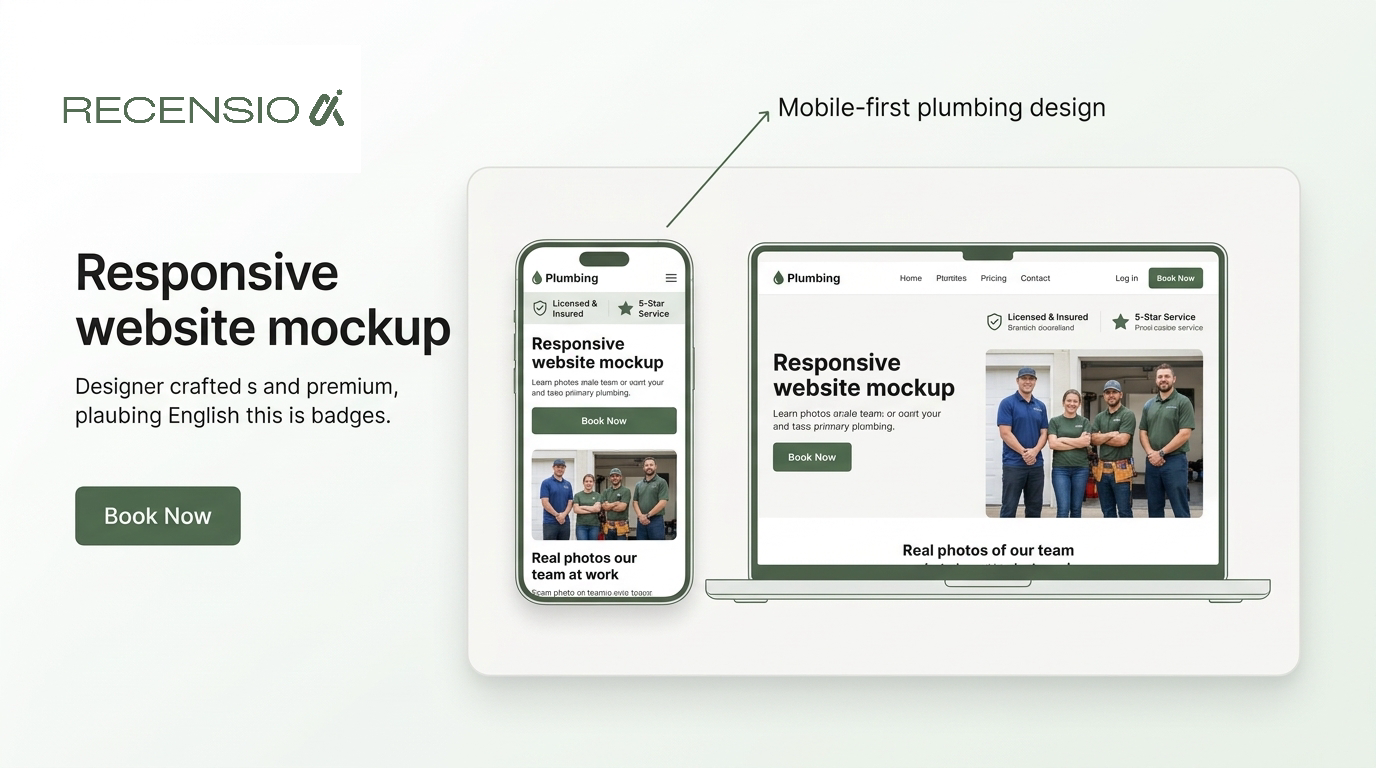
Table of Contents
The short answer
Plumbers need a website to rank locally and turn searchers into scheduled jobs. Google now includes direct home service booking and quote links inside AI search results. If your site lacks the right structure, you miss out on these automated leads.
A modern website for plumber businesses must load fast on mobile and offer instant contact options. It serves as your digital dispatch centre. This captures midnight emergency calls and routine maintenance requests alike.
Your website proves you are a legitimate, established business. Search engines use the text on your pages to understand exactly what services you offer. This data directly powers your local map rankings.
Do plumbers still need websites?
You might wonder if a website is still necessary. Many routine calls do come straight from a Google Business Profile phone number. Some plumbers report that over half of their emergency jobs bypass their website entirely.
But a website is critical for larger, high-margin jobs. Think about boiler installations or complete bathroom renovations. Customers planning major work want to see your credentials, past projects, and guarantees before they call.
A website also feeds essential data to Google. Without it, your Business Profile struggles to rank for competitive terms in your area. Google looks at your website to verify the services you list on your profile.
Furthermore, Google has expanded direct home service booking and quote links inside AI Mode. AI Mode is the feature that gives direct conversational answers at the top of search results. If you want these automated leads, your website must be properly structured.
- Major projects: homeowners research before booking large renovations
- Local rankings: a website feeds essential service data to Google
- Trust signals: professional sites show insurance and trade credentials
- AI readiness: clear text helps Google feature your instant booking links
- Data control: you own your website unlike third-party directory listings
What makes plumbing websites convert?
The best plumbing websites are built for speed and clarity. People searching for a plumber are often in a stressful situation. They do not want to read long paragraphs or navigate complex menus.
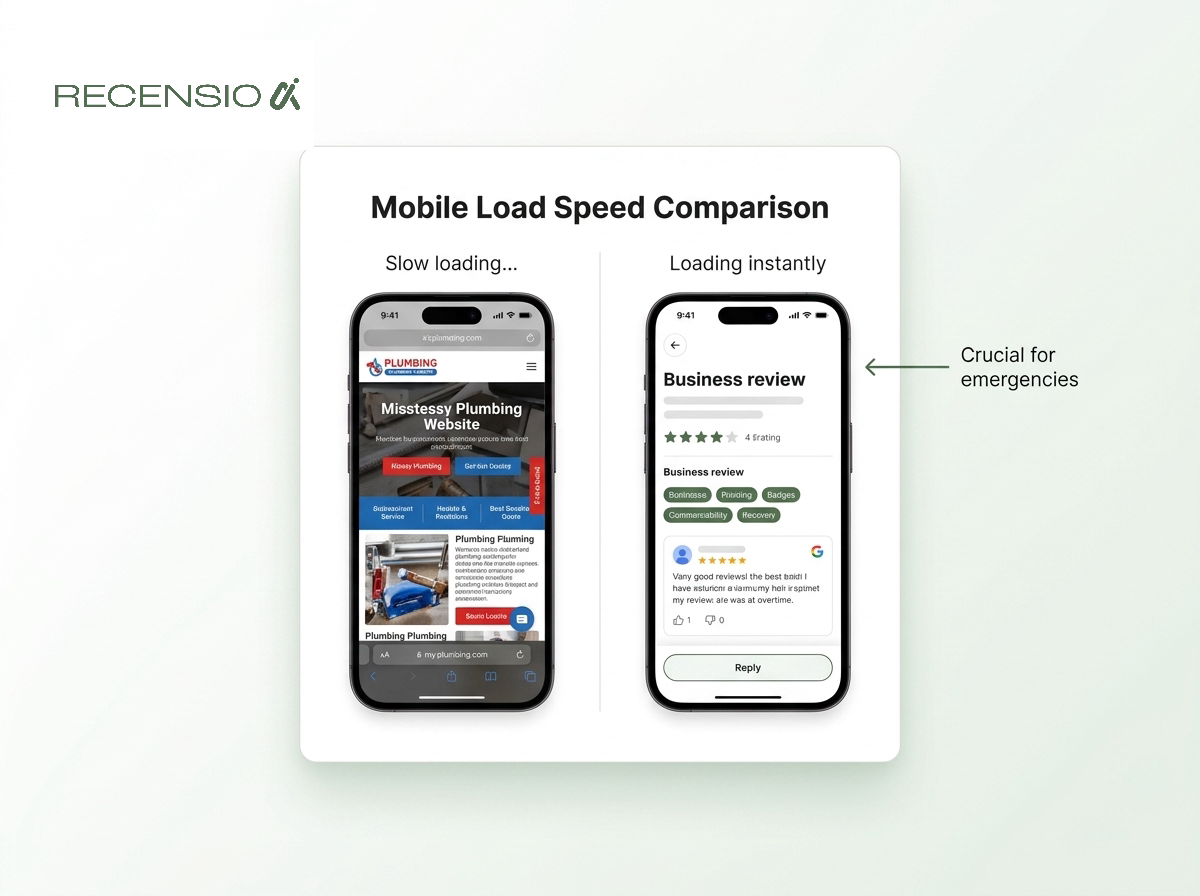
Mobile design is your priority. Most users will view your site on a smartphone while standing next to a leaking pipe. The design must be clean, with a prominent call button that works instantly.
Trust is your second priority. Use real photos of your vans and team. Stock photos of generic plumbers wearing pristine overalls actively harm trust. Show your actual local team hard at work.
Integrate your customer feedback. Pulling in live Google reviews shows potential clients that you are reliable. Do not hide your trade association logos or insurance details. Place these trust badges right near the top of your homepage.
- Sticky header: keep your phone number visible as users scroll down
- Real photos: show your actual vans, uniform, and team members
- Instant booking: integrate a simple scheduling tool for routine jobs
- Clear guarantees: highlight your warranties and response times plainly
- Mobile speed: ensure the site loads instantly on a smartphone network
Must-have pages for a plumbing website
A successful website needs a clear structure. Do not cram every service onto a single page. Google prefers specific pages for specific topics.
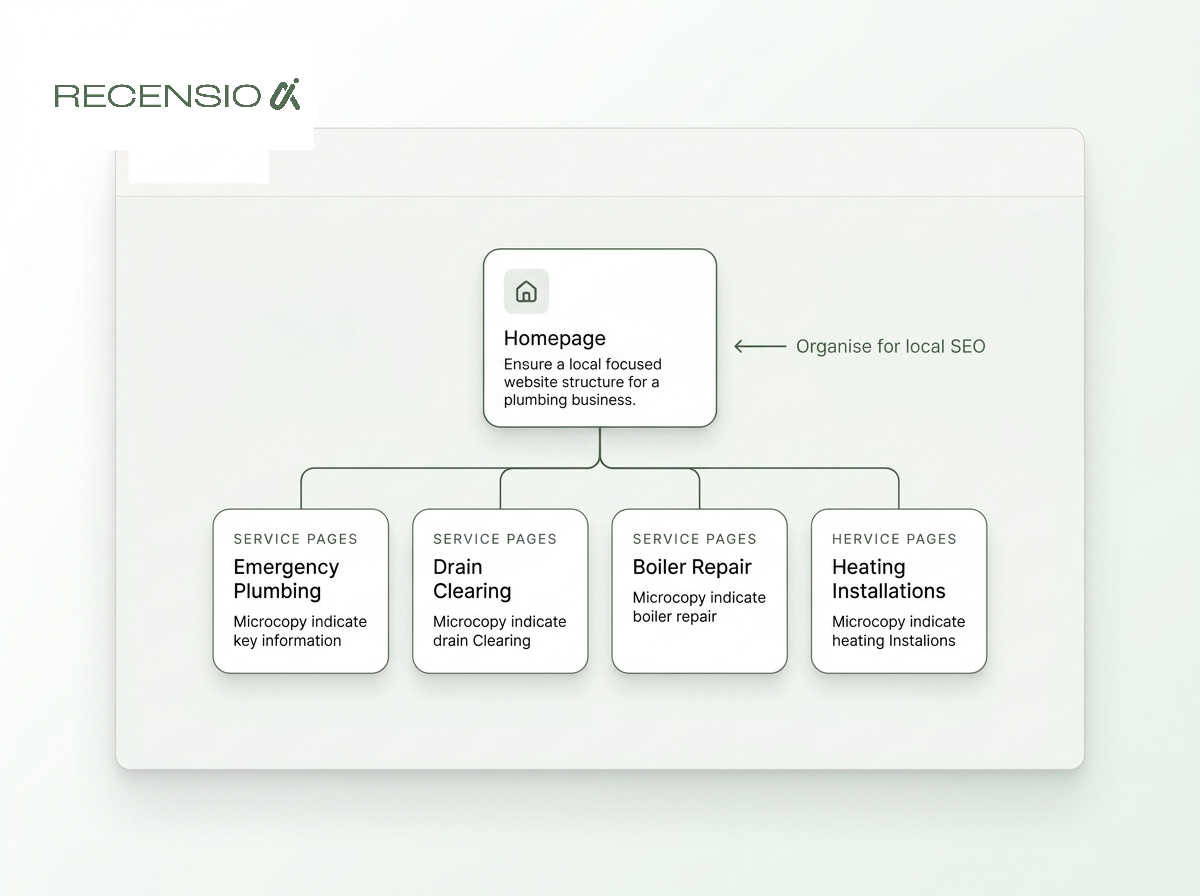
Your homepage acts as the welcome mat. It should clearly state who you are, where you operate, and how to reach you. Below this, link out to your specific services.
Create separate pages for your main revenue drivers. You need one page for drain cleaning, one for water heater repair, and one for bathroom installations. This allows you to rank for those specific local searches.
Always include a dedicated emergency plumbing page. Detail your response times and out-of-hours rates clearly. This page should be highly visible in your main navigation menu.
- Homepage: clear service summary with instant contact options
- Emergency services: a dedicated page for urgent 24-hour callouts
- Specific repairs: separate pages for drains, boilers, and heating
- About us: your history, service area, and team photos
- Contact: a simple form, phone number, and direct booking widget
Templates vs Bespoke: The builder dilemma
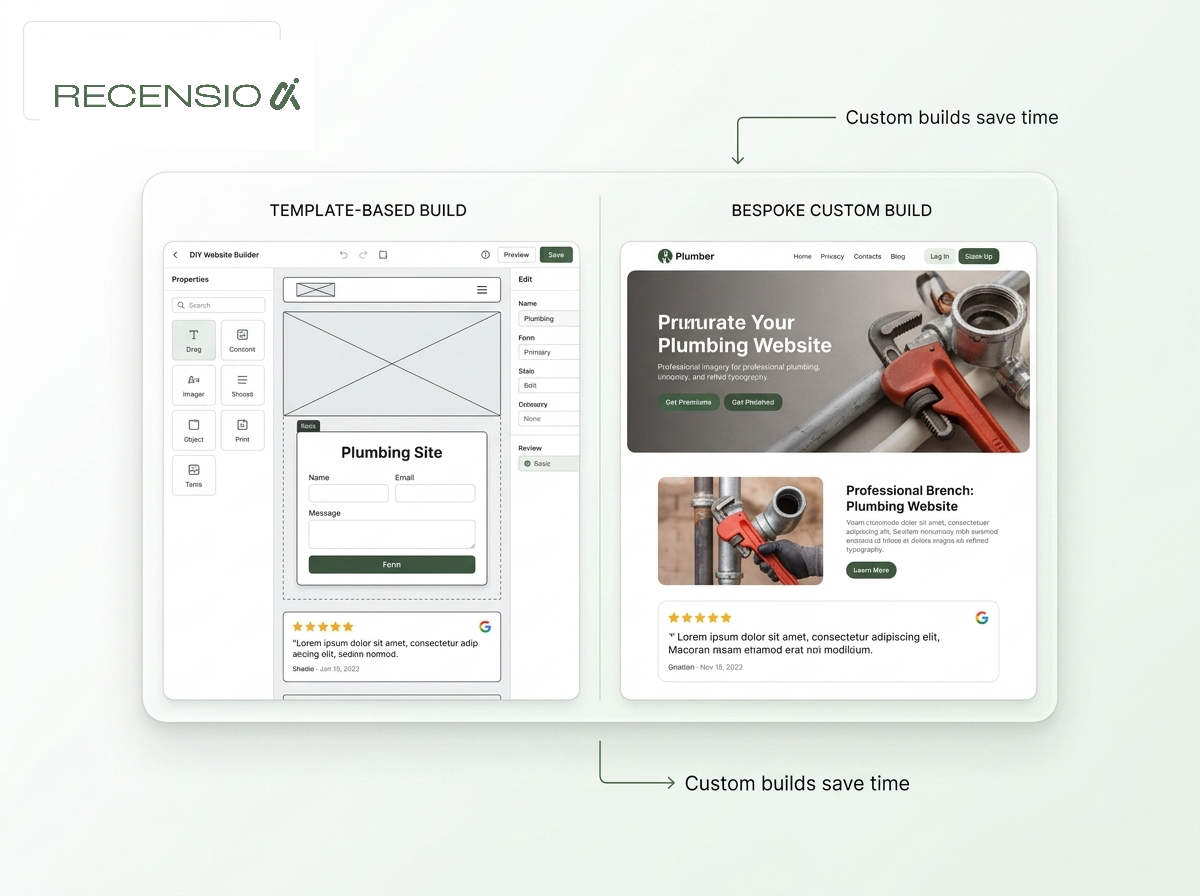
Many plumbers start by looking for a free website for plumber template. Platforms like WordPress, Webflow, and Squarespace offer attractive templates. They do a fine job of providing basic layouts and simple text editing.
However, templates place the burden of work entirely on you. You have to write the text, format the images, and figure out the mobile layout. If a plugin breaks or the site goes offline, you have to submit a help-centre ticket and wait.
A bespoke website is different. A human team builds the site for you, ensuring it is tested for mobile and tablet right out of the box. They handle the local SEO basics, the SSL certificates, and the ongoing monthly care.
If you are a busy business owner, a custom build saves you days of frustration. Our bespoke websites offer custom modern designs instead of generic templates. Packages start from 349 one-time, and you get real human support via WhatsApp or email whenever you need a change.
- Website builders: platforms like Wix or Squarespace are strictly DIY
- Free templates: cheap upfront but cost hours of your personal time
- Maintenance: builders require you to handle your own updates and fixes
- Bespoke builds: a human team designs and builds the site for you
- Professional support: custom builds include hosting and real help
Technical SEO and AI readiness
Technical SEO sounds complicated, but it is just about making your site easy for computers to read. Google needs to scan your site quickly and understand it perfectly. This is especially true now that AI systems summarize answers for users.
Your site must load incredibly quickly. A slow site frustrates users and gets penalized by search engines. Choose a fast hosting provider and compress all your photos before uploading them.
You also need clear, descriptive text. Do not just write "We fix pipes". Write "We provide emergency leak repair and pipe replacement in Central London". This exact phrasing helps AI search tools match your site to customer queries.
Make sure your booking system integrates cleanly. When Google looks for instant quote links, it scans your site for clear booking buttons and forms. A properly structured site makes it easy for these systems to feature your business. You can use our free Google Business Profile scan to see how your wider local presence is performing.
- Fast hosting: ensure your server responds quickly to Google bots
- Accurate NAP: keep your name, address, and phone consistent everywhere
- Booking links: use simple URLs that AI systems can easily read
- Detailed text: describe your services plainly without confusing jargon
Frequently asked questions
You might also like
Handpicked articles for you
Hotel Review Management: Automate Post-Stay Requests with Apaleo, Mews and Your PMS
A practical guide to turning hotel checkouts into timely review requests, with Apaleo live, Mews early access and flexible PMS alternatives.
Why the Business Around the Corner Beats You on Google: What 21,373 Profiles Reveal
We compared 21,373 Google Business Profiles with their three strongest nearby competitors. The gap is smaller than most owners think, but it has two sides: rating and volume.
Treatwell Review Management for Salons: One Reputation View Alongside Google
Bring your public Treatwell rating and recent reviews into RecensioAI, then combine salon signals with Google for faster, better decisions.