Restaurant Website Design That Works in 2026
Learn how a text-based, fast-loading website helps your restaurant rank higher on Google Maps and drive direct bookings. Stop relying on unreadable PDF menus.
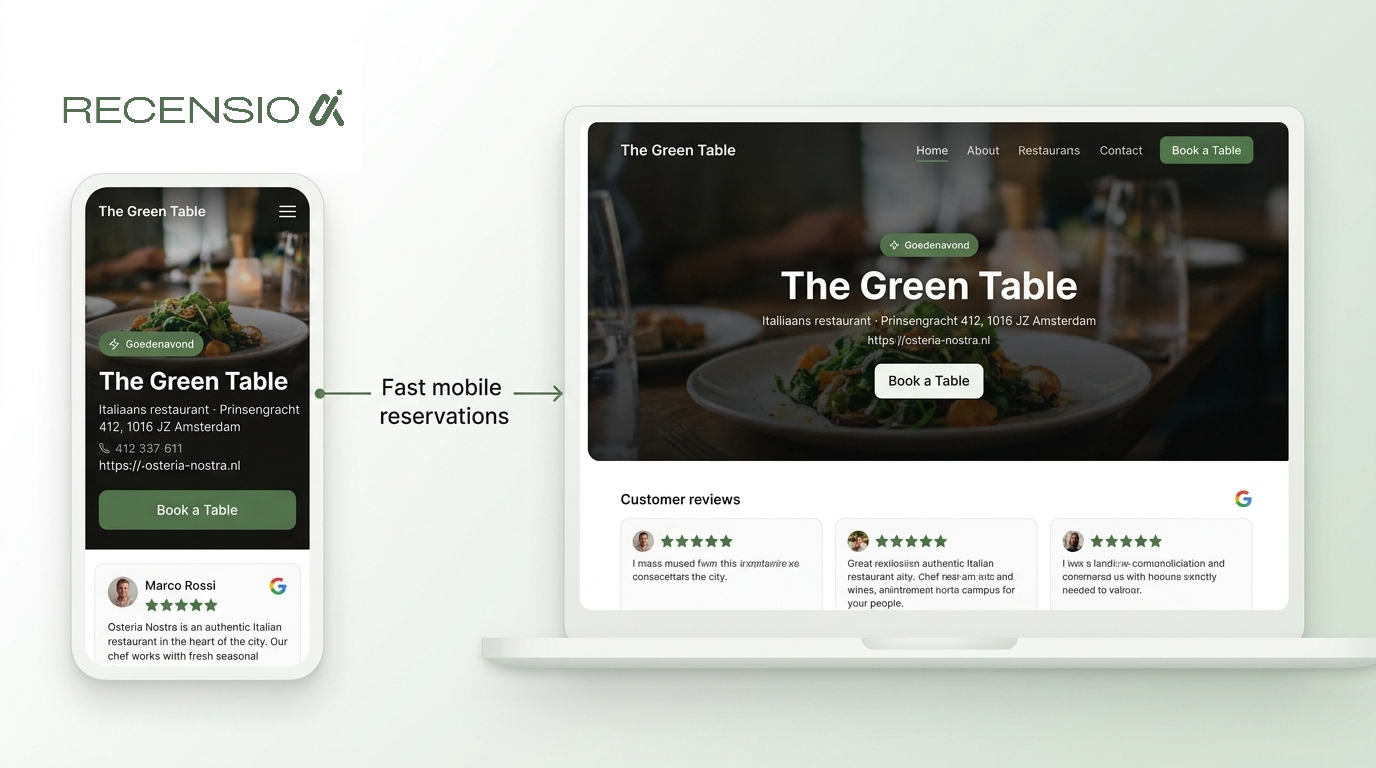
Table of Contents
The short answer
A strong restaurant website does two things very well. First, it gives Google exact text to read so your business appears in local searches and AI summaries. Second, it gives hungry locals a fast way to book a table or order directly.
Too many restaurants still use slow websites that rely on embedded PDF menus. These outdated designs fail in 2026 because search engines struggle to read them. If Google cannot read your menu, you will not rank for the specific dishes people want to eat.
The problem with PDF menus
PDF menus are incredibly frustrating for mobile users. A customer has to download a file, pinch to zoom, and scroll sideways just to read your starters.
Beyond poor usability, PDFs are bad for visibility. Google Maps and AI Overviews rely on crawling text to understand your business. AI Overviews are short, AI-generated answers that appear at the top of Google search results. If someone searches for "best gluten-free pizza near me", Google looks for those exact words on local websites.
When your menu is trapped inside a PDF file, search engines often skip it. This means your competitor with a proper HTML text menu will win that search traffic. You must type your menu directly onto your website pages.
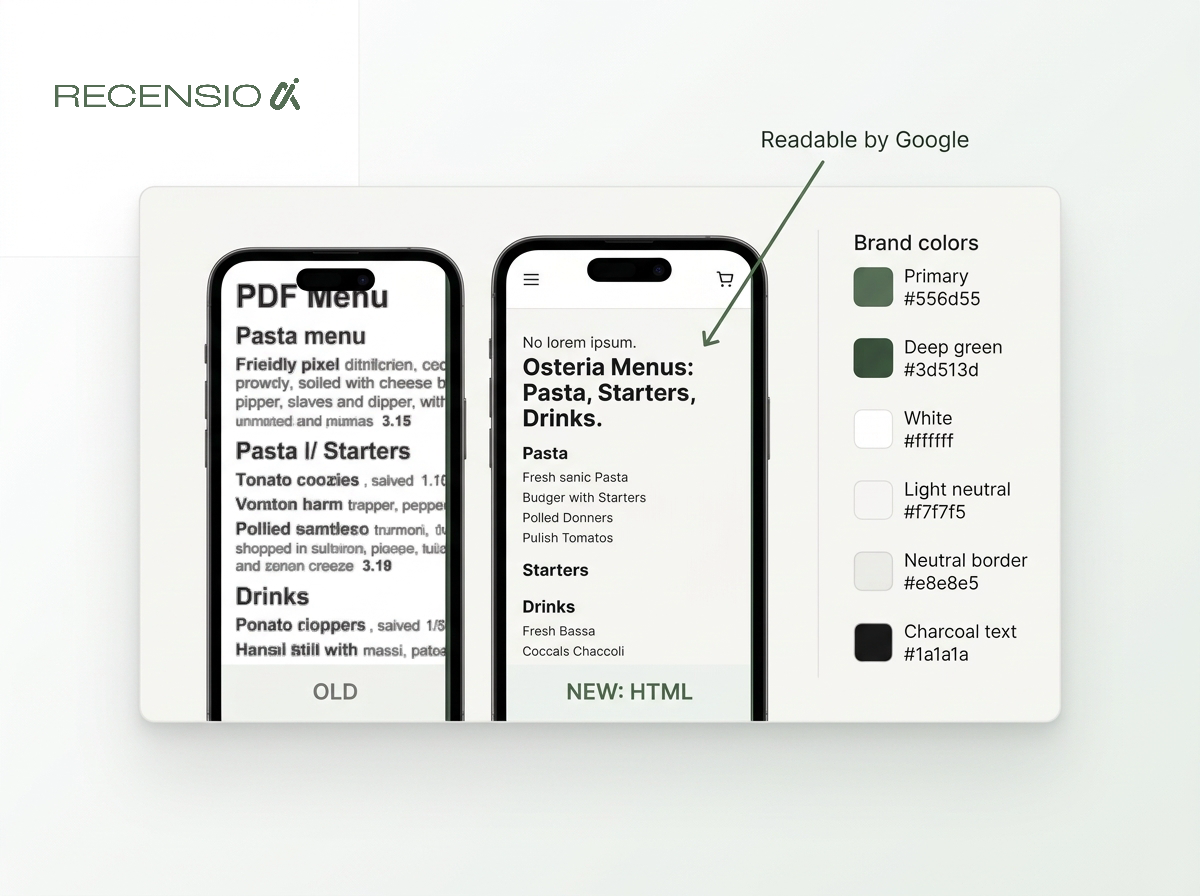
- Always type your menu items directly onto the page
- Include clear prices and allergy information in plain text
- Organise the menu with clear headings for starters and mains
- Update the website menu every time your physical menu changes
The anatomy of a great homepage
Your homepage is often the first interaction a diner has with your restaurant. You have about three seconds to convince them to stay.
A high-converting homepage answers the most urgent questions instantly. People want to know where you are, when you open, and what you serve. Put your exact address and current opening hours right at the top of the page.
Next, make the next step obvious. A large, contrasting button for reservations or direct orders should sit above the fold. Do not make users hunt for a way to give you money.
Finally, build trust immediately. Adding a feed of your recent positive reviews shows that other locals love your food. Always reply to these reviews on your Google Business Profile to show you care.
- Place your address and opening hours at the top
- Use a highly visible reserve or order button
- Show a high-quality photo of your best dish immediately
- Keep the navigation simple with links to menu and contact
- Embed a widget showing your latest Google Maps reviews
Visuals that sell the experience
People eat with their eyes first. The photography on your restaurant website is your best sales tool.
Many owners make the mistake of using stock photos or poorly lit phone pictures. Stock photos look fake and instantly break trust. Dark, blurry photos make your food look unappetising. You must invest in bright, sharp photos of your actual dishes.
It is also crucial to show the atmosphere. Diners want to see the dining room. They need to know if the venue is casual, romantic, or family-friendly before they book.
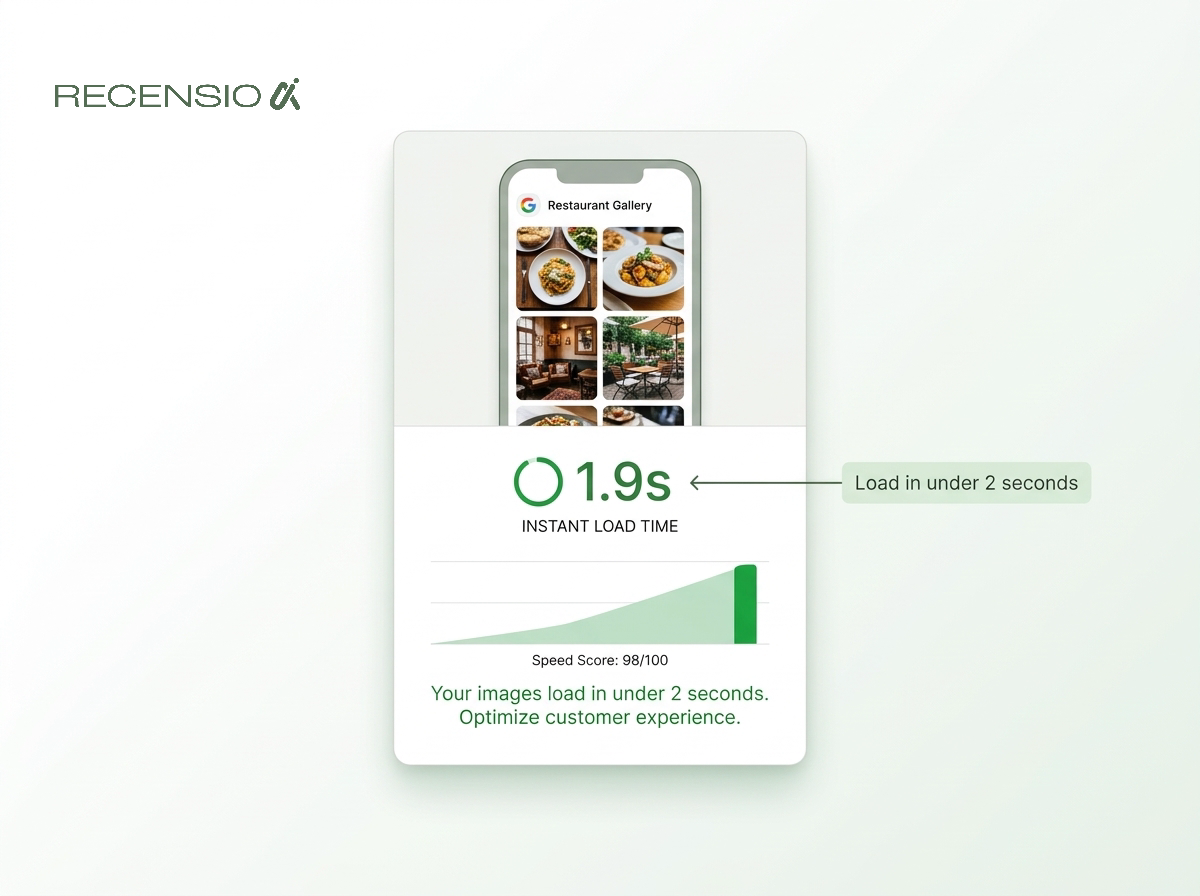
Large photos can slow down your website. Slow websites frustrate users and hurt your search visibility. Ensure every photo is compressed and saved in a modern format like webp.
- Never use stock photography for your food or venue
- Hire a professional photographer for at least one session
- Compress all images to webp format for fast loading
- Show pictures of the dining room during a busy service
Direct booking vs third-party apps
Third-party delivery apps are great for getting your name out there. However, relying on them for all your digital orders is a fast way to lose money.
These platforms charge steep commissions on every single meal. When you have a bespoke website with a direct ordering system, you keep all the revenue.
Direct bookings also give you ownership of customer data. When someone orders through an app, the app owns that customer. When they order through your website, you can collect their email address. You can then contact them directly with special offers.
Use delivery apps as a marketing tool. Once a customer tries your food, put a flyer in the bag encouraging them to use your website next time.
- Direct orders save you from paying 30 percent commissions
- You control the customer data and email list
- Delivery apps are good for discovery but bad for margins
- Make direct ordering cheaper than app ordering to encourage use
DIY builders versus bespoke design
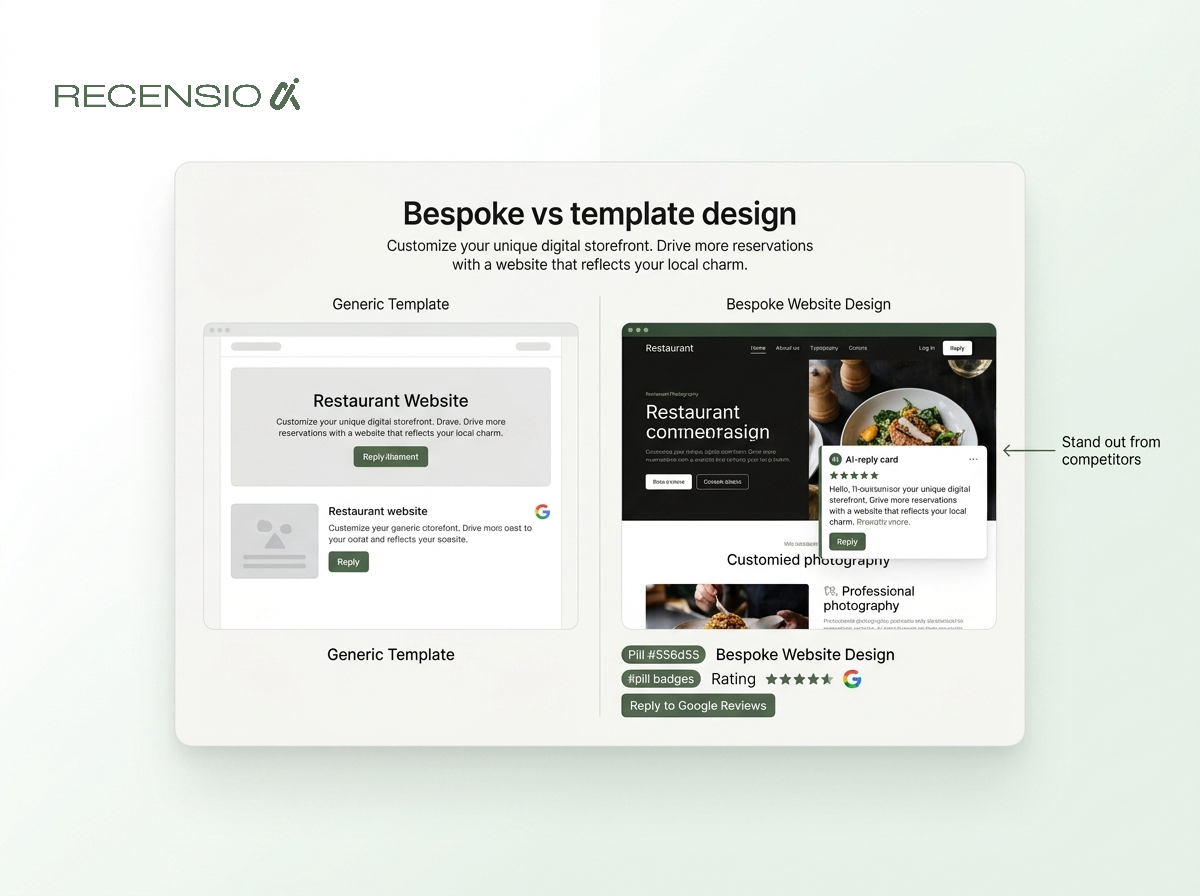
When building a restaurant website, you can use a DIY builder or hire a professional. Platforms like Wix, Squarespace, and WordPress are powerful tools. They offer good templates and are relatively cheap to start.
However, DIY builders require a lot of your time. You have to write the text, format the mobile view, and handle the technical updates. Most busy restaurant owners do not have forty spare hours to learn web design.
A bespoke service handles the entire process for you. For example, our team builds custom bespoke websites starting from 349 one-time.
With a custom build, you get a unique design rather than a standard template. You also get real human support via WhatsApp or email, rather than fighting with support tickets. We handle the hosting, security, and local SEO setup so you can focus on running your kitchen.
- Wix and Squarespace offer good templates for DIY owners
- Building a site yourself takes dozens of hours
- Bespoke sites include professional design and human support
- Custom builds ensure perfect mobile formatting and fast speeds
Frequently asked questions
You might also like
Handpicked articles for you
Hotel Review Management: Automate Post-Stay Requests with Apaleo, Mews and Your PMS
A practical guide to turning hotel checkouts into timely review requests, with Apaleo live, Mews early access and flexible PMS alternatives.
Why the Business Around the Corner Beats You on Google: What 21,373 Profiles Reveal
We compared 21,373 Google Business Profiles with their three strongest nearby competitors. The gap is smaller than most owners think, but it has two sides: rating and volume.
Treatwell Review Management for Salons: One Reputation View Alongside Google
Bring your public Treatwell rating and recent reviews into RecensioAI, then combine salon signals with Google for faster, better decisions.