Do I Need a Website if I Have a Google Business Profile? (2026 Guide)
Discover why a Google Business Profile alone is not enough in 2026. Learn how combining a profile with a bespoke website protects your business and drives more local clients.
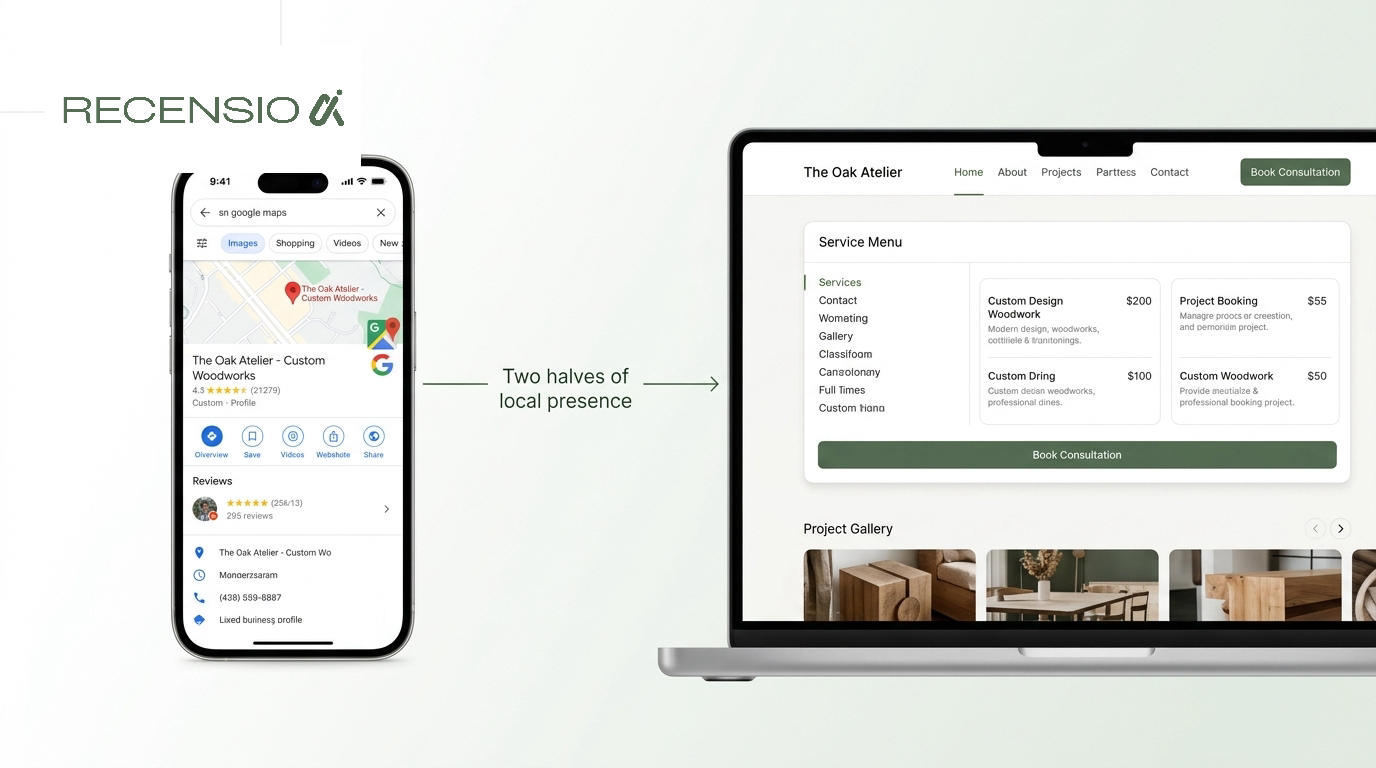
Table of Contents
The Short Answer
If you are wondering, "Do I need a website if I have a Google Business Profile?", the short answer is absolutely yes.
A Google Business Profile (formerly Google My Business) is essential for getting found on Maps and appearing in local search results. However, it is fundamentally a leased space owned by Google. You are subject to sudden algorithm changes, AI overview shifts, and the constant risk of profile suspension.
Your website is the asset you own. It is where you convert the traffic Google sends you, providing the deep, factual content that AI search engines use to answer complex queries about your services. In 2026, a strong local presence requires both: the profile for immediate visibility, and the website for authority, booking, and protection.
What a Google Business Profile Does Well
Your Google Business Profile is the front door to your business. When someone in your city searches for a plumber, a hair salon, or a café, Google Maps and the Local Pack are often the first things they see.
A well-optimised profile provides instant answers: your opening hours, address, phone number, and most importantly, your reviews. It allows customers to make a split-second decision based on your star rating and proximity.
However, a profile is not designed to tell your whole story. It limits how much text you can display, dictates the layout of your photos, and offers basic, standardised buttons.
What a profile does well: * Puts you on the map for local "near me" searches. * Collects and displays customer reviews. * Provides quick contact details (click-to-call, directions). * Allows for short, timely updates via posts.
Where the Profile Runs Out of Room
If a profile is so good at capturing local searches, why build a website? Because a profile is just a summary.
Imagine a potential client searching for "emergency roof repair cost" or "balayage vs highlights". AI-driven search features and traditional results look for detailed, authoritative answers. Your Google Business Profile cannot house an in-depth guide to your pricing structure, nor can it showcase a high-resolution, categorised portfolio of your past projects.
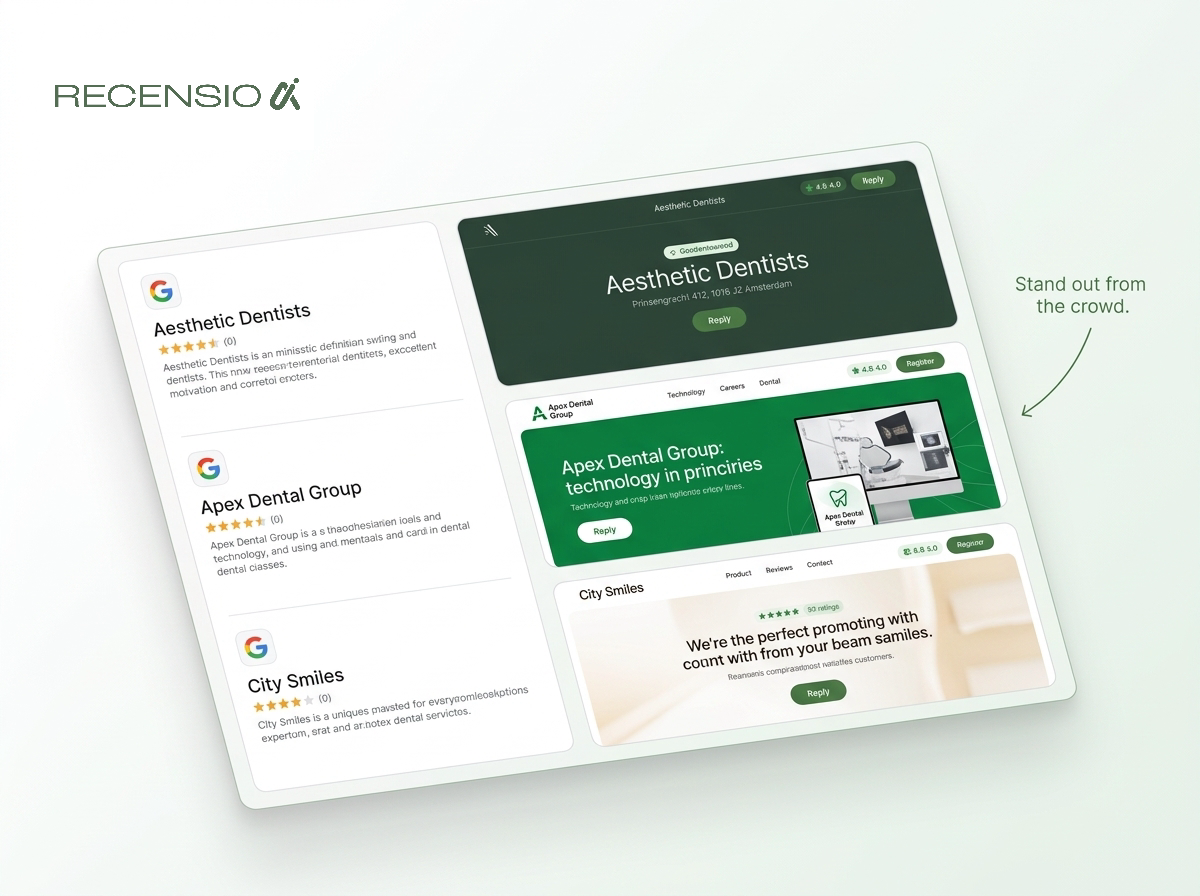
Furthermore, a profile provides a uniform experience. Your listing looks exactly like your competitor's listing, save for the photos and the name. You cannot brand the experience, control the user journey, or easily integrate complex booking software.
Where the profile falls short: * Branding: You cannot change the colours, fonts, or layout. * Depth of content: Space for service descriptions is strictly limited. * Conversion: You rely on Google's basic buttons rather than custom calls-to-action. * Analytics: Insights are basic compared to full website analytics.
The Ownership Problem: Rented Land vs Your Asset
Perhaps the most critical reason you need a website in 2026 is ownership. When you rely solely on a Google Business Profile, you are building your business on rented land.
Google frequently updates its spam guidelines and algorithms. Entire legitimate businesses can face sudden profile suspensions due to a minor technical violation or a malicious report from a competitor. If your profile disappears and you have no website, your business effectively vanishes from the internet overnight.
A website is your digital fortress. You own the domain name. You control the hosting. If a platform changes its rules, your website remains your anchor. Moreover, having a verified, authoritative website linked to your profile acts as a trust signal to Google, often helping to protect against erroneous suspensions.
The risks of profile-only presence: * Sudden suspensions: Immediate loss of all online visibility. * Algorithm shifts: Dropping out of the local pack with no backup traffic source. * Competitor edits: Anyone can suggest an edit to your profile (like changing your hours). * Zero-click searches: AI summaries might answer queries without directing users to you.
What a Website Adds to Your Local SEO
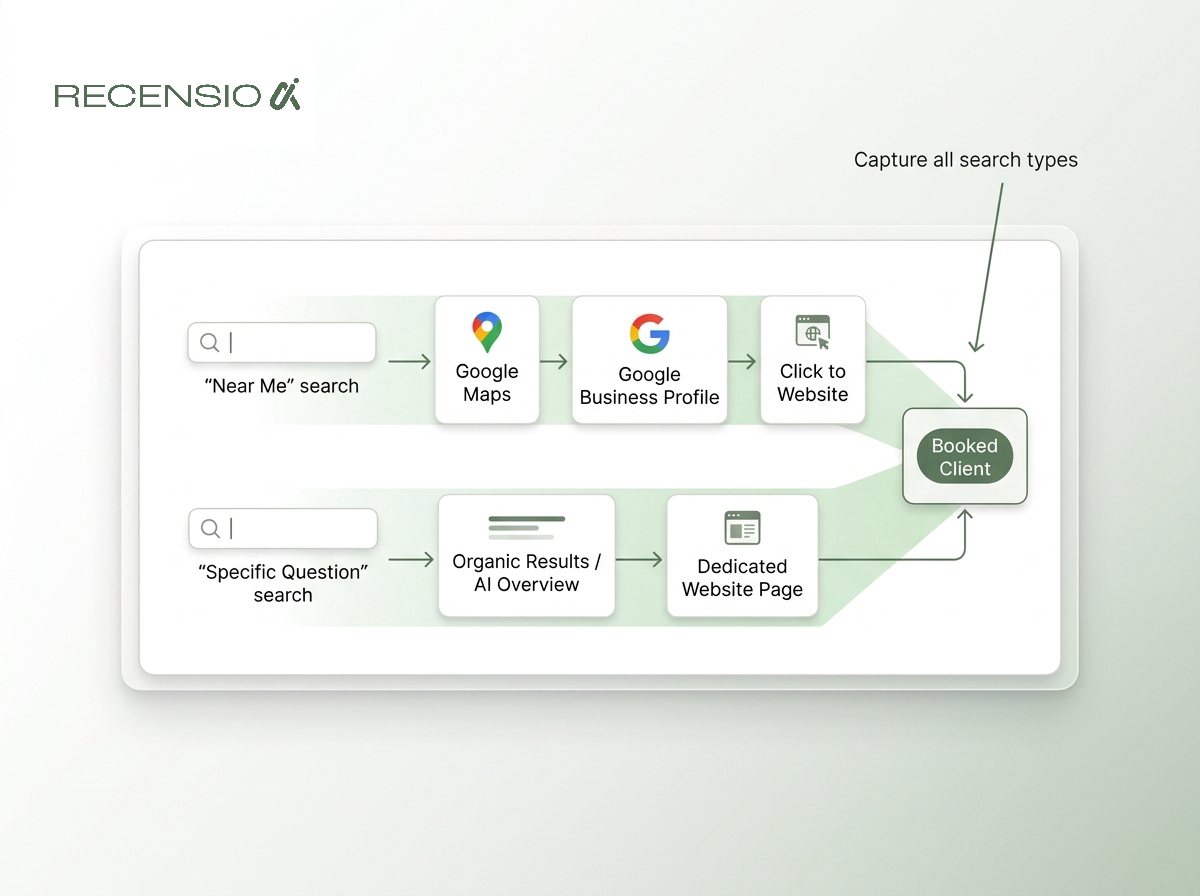
A website and a Google Business Profile are not an either/or choice; they work together. When a user finds you on Maps, they often click the "Website" button to verify your legitimacy.
A bespoke website allows you to build organic authority. By creating dedicated pages for each service you offer and each area you serve, you capture searches that fall outside the immediate Maps radius.
For example, a local electrician might have a profile that ranks well for "electrician near me." But their website can rank for "how to fix a tripping breaker in [City]" or "house rewiring costs."
If you are a busy owner, building a site does not have to be a headache. While DIY builders like Wix or Squarespace exist, they require time and design skills. Opting for bespoke modern websites built by a human team ensures you get a professional result that works flawlessly on mobile, with local SEO basics included, starting from 349 one-time.
What a website adds to your business: * Trust and credibility: A professional design reassures cautious buyers. * Service pages: Detailed explanations of exactly what you do. * Organic reach: Capturing long-tail keyword searches. * Integration: Seamless connection to your CRM or custom booking software.
Keep Them Consistent and Connected
To dominate local search in 2026, you must keep your website and your Google Business Profile perfectly synchronised. Inconsistencies confuse both customers and search engines.
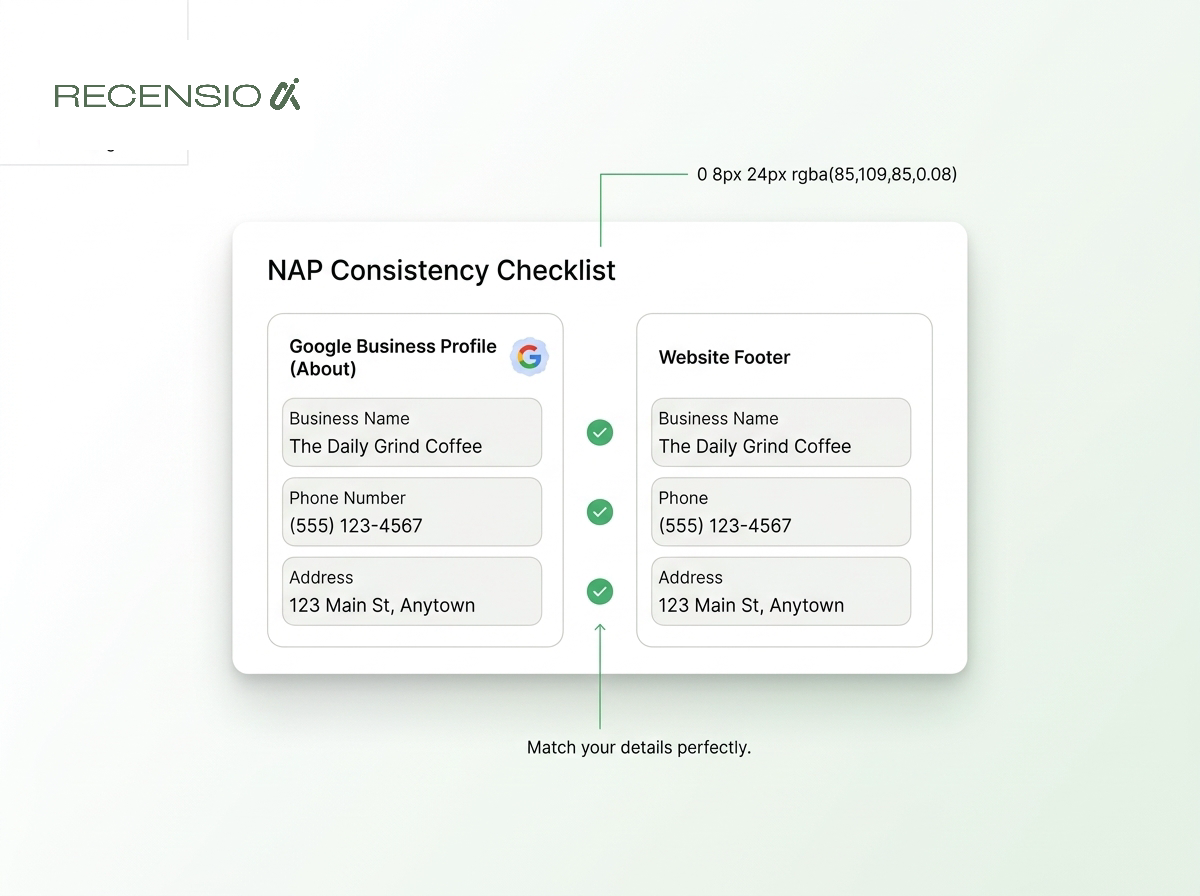
Ensure your Name, Address, and Phone number (NAP) are identical on both platforms. The website link on your profile should point directly to your homepage (or a specific location page if you have multiple branches).
Furthermore, embed a Google Map of your location on your website's contact page. Use the exact same business categories on your site that you selected in your Google Business Profile Manager. When AI tools crawl your digital footprint, this consistency proves you are a real, reliable local entity.
Steps for consistency: * Match your NAP details exactly (e.g., don't use "St" on the profile and "Street" on the site). * Ensure business hours match perfectly, including holiday hours. * Use consistent branding and logos across both. * Link your profile to your site, and embed your Maps listing on your site.
Frequently asked questions
You might also like
Handpicked articles for you
Hotel Review Management: Automate Post-Stay Requests with Apaleo, Mews and Your PMS
A practical guide to turning hotel checkouts into timely review requests, with Apaleo live, Mews early access and flexible PMS alternatives.
Why the Business Around the Corner Beats You on Google: What 21,373 Profiles Reveal
We compared 21,373 Google Business Profiles with their three strongest nearby competitors. The gap is smaller than most owners think, but it has two sides: rating and volume.
Treatwell Review Management for Salons: One Reputation View Alongside Google
Bring your public Treatwell rating and recent reviews into RecensioAI, then combine salon signals with Google for faster, better decisions.